How Movember Built a Candidate Experience People Remember

For smaller not-for-profits, often working with limited resources, improving candidate experience does not require big budgets or complex programmes. Simple, practical changes such as clearer communication, easier scheduling and more thoughtful feedback can make a meaningful difference. Our progress came from a series of small, deliberate improvements across the hiring journey. Candidate experience is not something you add on at the end. It is shaped by everyday decisions and how consistently they are applied. When those decisions reflect your purpose and values, the result is an experience people genuinely remember.

Talent versus Procurement: How the struggle for ownership is undermining Contingent Workforce Maturity

Talent versus Procurement: How the struggle for ownership is undermining Contingent Workforce Maturity

Talent leaders focus on visibility, capability, speed, and workforce outcomes. Procurement leaders prioritise cost control, risk, and supplier performance. Business units want flexibility and fast access to skills. When one stakeholder wrestles control of their Contingent Workforce, dangerous trade-offs are made. Many remain in a state of constantly addressing foundational issues such as visibility and compliance, without progressing to optimisation, AI enablement, or using contingent talent as a competitive advantage in market.

Abano Healthcare Talent Story - Getting a New AI Talent Tech Stack approved

Getting a New AI Talent Tech Stack approved

In 2023, Abano faced acute workforce shortages, particularly in clinician and regional roles, exacerbated by legacy systems, fragmented recruitment processes, and heavy reliance on recruitment agencies. To support business growth and access to care, Abano needed to rapidly scale hiring capacity while improving quality, reducing costs, and delivering a markedly better experience for candidates and hiring managers.

How Canva Redesigned Technical Interviews for the AI Era

How Canva Redesigned Technical Interviews for the AI Era

All Front End and Back End Engineers at Canva now use AI tools daily. They leverage AI to prototype ideas, understand their large codebase, and generate code. This new way of working meant that job interviews didn’t mirror the new engineering workflows. The old model was syntax recall and algorithm drills but, the new and now ‘real’ work was prompting, code review and trade-offs. We needed better signal on engineering judgment so we evolved our hiring practices to match the new tools and practices being used.

Session highlight from ATC2025

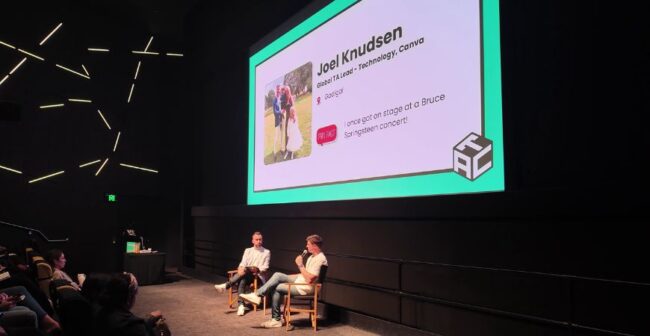
At ATC2025, the session “Canva Redesigned Tech Interviews for the AI Era” was a standout example of how hiring practices are catching up with the realities of modern work. I found this session both refreshing and thought-provoking. Canva’s approach challenges the old model of technical interviews by recognising that coding in 2025 isn’t a solo act, it’s a collaboration between humans and AI. Rather than testing memory or syntax, their process evaluates how candidates think, prompt, and problem-solve alongside intelligent tools. It felt like a glimpse into the future of hiring.