Setting the Scene
Organisation Context: Abano Healthcare is a Dental Support Organisation, 250+ sites operating across Australia and New Zealand, where workforce availability directly impacts revenue, patient access, and brand trust. Talent shortages are a commercial and clinical risk.
Talent Function: The Talent function is a centralised, enterprise-wide team led by the Chief Talent Officer. Historically reactive and transactional, the function has been transitioning over the past 2 years toward a proactive, strategic, and technology-enabled model. It now operates as a workforce partner to the business, combining in-house talent partners and AI-driven tools to support scale and sustainability.
Problem Statement: The problem was Talent Acquisition was not architected to support business growth. In 2023, Abano faced acute workforce shortages, particularly in clinician and regional roles, exacerbated by legacy systems, fragmented recruitment processes, and heavy reliance on recruitment agencies. To support business growth and access to care, Abano needed to rapidly scale hiring capacity while improving quality, reducing costs, and delivering a markedly better experience for candidates and hiring managers.
Strategic Alignment: This initiative reframed TA as:
- A growth enabler, not a cost centre
- A risk mitigator, not a service function
- A provider of workforce intelligence, not just hires
- The tech stack and AI investment became the mechanism, not the objective.
The transformation directly supported Abano’s enterprise priorities: expanding access to care, strengthening workforce diversity, reducing operational costs, and positioning Abano as an employer of choice. It aligned with broader initiatives across digital transformation, DEI, and long-term workforce sustainability. The Talent strategy is aligned with the business strategy and forms a foundational piece for the business to achieve growth.
Goals & Success Metrics
Quantitative Goals
- Increase speed-to-capacity for clinical roles impacting revenue and patient throughput
- Reduce external labour dependency and balance-sheet leakage
- Improve forecast accuracy for workforce planning and expansion
Qualitative Goals
- Increase executive confidence in workforce data
- Shift hiring managers from opinion-based to insight-led decisions
- Position TA as a credible strategic partner to Operations and Finance
Aspirational Goals
- Build a talent engine that operates even when recruiters are offline
- Create ethical, governed AI capability before the organisation is forced to react
Stakeholder Engagement Approval is political before it is technical.
TA did not “sell a system.” They built a coalition of belief.
Internal Stakeholders
- CEO & CFO: Focused on growth, cost, and risk
- CHRO: Focused on capability, governance, and brand
- Clinical and Operational Leaders: Focused on speed, quality, and continuity of care
- Finance & Risk: Focused on ROI, controls, and compliance
- Legal and privacy advisors to de-risk AI use upfront
External Stakeholders
- AI and ATS vendors as partners
Governance Model
- Chief Talent Officer champion and Project lead.
- Executive steering group with financial and risk accountability
- Talent led strategy, business case, and change management with oversight of validated ROI and cost controls
- Legal and Risk governed AI ethics, privacy, and compliance
- TA accountable for outcomes, not adoption – This repositioned TA from “requestor” to business owner.
Approach / Actions Taken
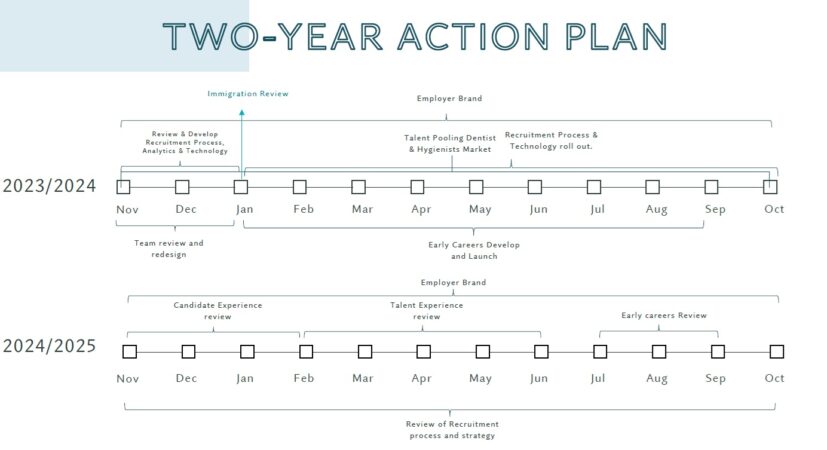
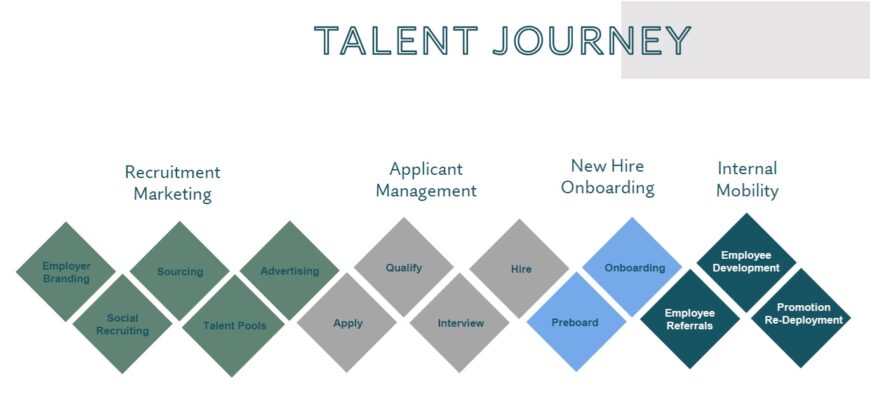
The team mapped the current-state recruitment journey, quantified pain points, and designed a future-state “always-on” talent model focused on automation, proactive sourcing, and fairness by design. TA reframed the conversation from: “We need a better ATS” to “Our current hiring model cannot support our growth strategy.”
The team quantified:
- Cost of vacancy
- Cost of delay
- Cost of agency reliance
- Risk of unmanaged AI adoption in the market
Technology / Tools (as an Enabler)
- Core ATS as the system of record
- AI adoption for capacity multiplier, rather than headcount reduction
- AI-powered sourcing for passive talent
- AI as a bias control mechanism, instead of a shortcut
- Automated reference checking and work rights verification
- Chatbot for 24/7 candidate engagement
- HRIS integration for seamless onboarding
Processes / Methods
- Standardised workflows across all roles
- Human decision-making remained central
- Embedded AI at sourcing and screening stage, not decision-making stage; this requires a human judgement.
- Clear recruiter and hiring manager decision points
Side-by-Side Testing / Pilots
- Piloted AI sourcing and screening on hard-to-fill roles
- Ran parallel processes to validate quality, speed, and fairness
- Used real data to refine the executive business case
Ethics & Governance
- AI used to augment, not replace, human judgment
- Regular bias testing and adverse impact reviews
- Clear data privacy, consent, and transparency controls
Communication Plan
- Executive briefings focused on ROI and risk
- Recruiter training and certification
- Hiring manager toolkits and demos
- Organisation-wide comms positioning AI as assistive tool
Outcomes & Results
Quantitative Impact
In the first 12 months, the team saw:
- Clinical Support Time-to-hire reduced by 52%
- Clinical Support hiring increased by 165%
- Total clinical hiring increased by 122%
- Just over $1.2M removed from agency spend in first 12 months.
This was also quantified in revenue and financial impact terms.
Qualitative Impact
- TA was invited earlier into the expansion and workforce discussions
- Hiring managers trusted data over instinct
- Recruiters transitioned from coordinators to advisors
Unexpected Outcomes
- Improved recruiter wellbeing and engagement due to always-on sourcing
- Stronger executive appetite for further AI investment
- TA credibility increased at Board level to deliver the people required for the 3-year business strategy and growth plans
Challenges & Do-Overs
Hard Truths
- Approval from the hiring team was AI Fear, where from leadership was less about AI fear and more about trust in TA maturity
- Some leaders were more comfortable with expensive agencies than transparent AI
Learnings
- If TA cannot articulate commercial value, it will never get strategic approval
- AI exposes weak processes faster than it fixes them
- Governance is a leadership capability, that goes beyond a policy document
Advice to TA Leaders
- Stop asking for tools that are sold to you but don’t solve business problems. Tools are not a one-size-fits-all solution, when it comes to recruitment. They may work for 1 type of role type and not others.
- Speak in dollars, risk, and growth, not reqs and workflows
- If TA doesn’t lead AI adoption, someone else will
Next Steps
- Expand AI-enabled sourcing and screening to new role families
- Use talent data to inform site expansion and service planning
- Move from hiring velocity to workforce intelligence