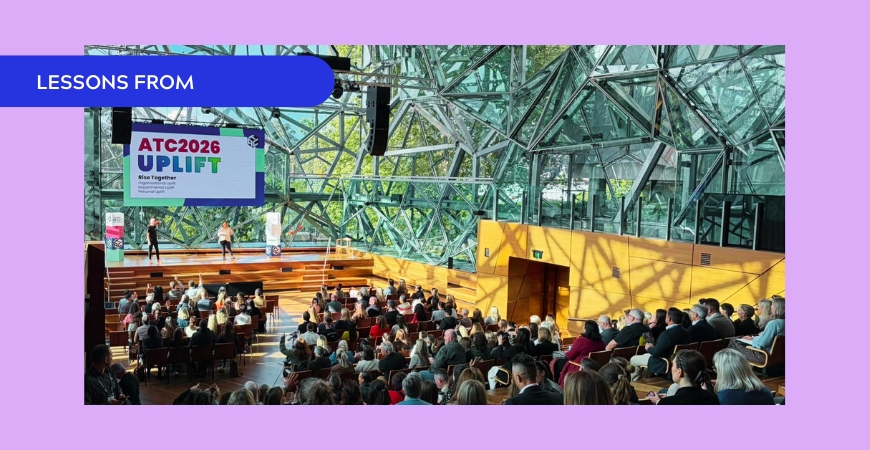
Will AI agents eventually take over the majority of recruitment tasks? With talent functions evolving into Talent Advisory and recruiters evolving into architects of an agentic future, are we evolving quickly enough to keep up with the pace of change? And how do we balance change while keeping people in focus and human judgement above all?
These are some of the questions at the heart of this year’s ATC2026 UPLIFT: Rise Together.
Last year the focus was on the AI revolution and its anticipated impact on the talent industry. Fast-forward twelve months, and the conversation has noticeably shifted. We’re no longer simply discussing what AI might do, we’re exploring how organisations are implementing it, how traditional talent functions are being redesigned, ways to preserve human judgement and what this means for the Talent Profession.
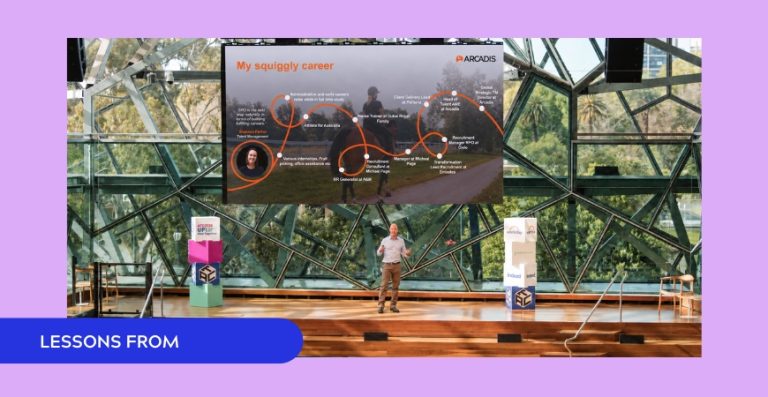
Themed UPLIFT, the conversations were focused on organisational, departmental and personal transformation. Here I’m sharing some lessons that stood out to me the most.
Fiona Lund, Chief People Officer at Movember, shared how the Movember Workforce Lab brings Business, People, Talent and Finance together to create the conditions for Talent Advisory to occur and to help with workforce make more aligned and holistic decisions. Fiona’s session offered eight practical lessons, including what didn’t work along the way:
- Align People & Finance and Budget Cycles – salary is the top cost for organisations
- Create the conditions and operating rhythms for Talent Advisory to occur
- Examine work through four lenses: People, Role, Capability and Capacity
- Throw out the 12 month fix, it’s OK to have a three-year plan and move at the speed and maturity of the business
- Data may be disparate so start with data people believe in
- Avoid the constant delivery trap, protect the time you need to do something different
- A backfill can still be the right decision but explore your options first
- Let Business Leaders help tell the story
Robyn Hill from EdgeIQ.Global shared her leadership lessons from companies like Unilever, AWS and L’Oreal all via the lens of a boat cruise gone wrong! Robyn broke down the boat’s mechanical failure into three areas:
- The Engine. The operations vision and direction.
- The Crew. In this instance, Talent – the people who deliver the direction.
- The Instruments. The technology that enables the journey.
💡Lesson 1: A well-crewed, well-equipped ship with no engine still goes nowhere.
💡Lesson 2: Direction needs to live in the culture, leadership and everyday operating rhythms. Shared language and consistent leadership principles help people understand where the business is heading and how to make decisions that support it.
💡Lesson 3: The future of work starts with the future of business, and these are the questions that HR and TA Leaders need to ask in order to unlock everything else:
- What’s the new business strategy?
- What’s the future of your industry category?
- Who owns that direction?
- How will we lead our people and functions through this change?
Tosh Onishi from UNSW reflected on his experience as a global talent leader and what talent leaders need to know when going from ANZ to APAC leadership role.
That’s when the role expands to navigating very different labour laws, hiring processes and expectations, different communications styles, timezones, cultural dynamics, language barrier and more. His practical lessons included:
💡Lesson 1: Leadership now includes timezone considerations and modelling boundaries. Manage teams not just effectively, but to prevent burnout and make team experience better by managing times and hours of work, giving everyone time to prepare for meetings and more.
💡Lesson 2: Understand the legal environment before you hire. Tosh highlighted how differences in employment protections affect hiring risk and assessment decisions. His advice was to work with local legal teams to understand the regulatory environment, including the implications if a hire doesn’t work out.
💡Lesson 3: Build relationships before expecting candidates to move. Drawing on his experience in Japan, Tosh described how loyalty, tenure and responsibility towards colleagues can outweigh an otherwise attractive offer. Referrals, trusted recruitment partners and long-term relationships are important parts of the attraction strategy.
💡Lesson 4: Create space for different voices, and lead for the culture in front of you. Agreement with the boss may reflect respect rather than genuine agreement. Avoid speaking first, invite private contributions and give people time to formulate their views. Cultural sensitivity also means adapting how you have difficult conversations while still having them.
Andrew Baker from Hudson Talent Solutions shared his team’s experience of putting AI agents inside real teams, including what worked, what stalled and what they learned.
The AI agents were embedded across a variety of businesses including a global confectionary business, beverages, electronics, energy, media, recruitment businesses to name a few. Some key lessons from this great session are:
💡Lesson 1: Shift from deploying an agent to onboarding a colleague. Give every agent a named boss who checks its work, owns its performance and supports its improvement. Andrew argued that implementation needs to be treated as a human change experience.
💡Lesson 2: Give the agent a name and a clear role. Hudson’s agents have names and defined responsibilities. Andrew described this as helping people engage with them as colleagues within the flow of work.
💡Lesson 3: Start with the boring work, and invest in feedback. Choose one repetitive task, provide context and refine the agent over time. Expecting it to do everything from day one, then abandoning it when it falls short, misses the work needed to make it useful.
💡Lesson 4: Fix the work before you automate it. Map the team’s tasks, decide what to stop, do differently or start, and redesign the workflow before introducing technology. Agree what good looks like, prove value on a small scale, then expand.
No ATC without Kevin Wheeler’s from Future of Talent Institute predictions and this year was no exception. This thought-provoking session was about the journey of a recruiter becoming an architect of the agentic future.
Kevin predicted that:
🔮 Agents will handle the majority of scheduling and initial screening work. Advisory work grows as opposed to just being Acquisition
🔮In the rise of deepfakes and collapse of candidate signals, majority of the US and Australian employers will verify identity before the interviews
🔮With candidate agents interacting with employer agents, Agent to Agent hiring is set to increase
🔮With digital twins reproducing patterns of top recruiters, the legal disagreements over digital twin ownership most likely will take place in the near future
🔮Employers will increasingly be asking whether additional work requires another hire. The decision becomes whether each task needs a person, an agent or both, with implications for TA staffing and future talent pipelines
🔮The usage of AI in the recruitment process will have to be disclosed at some point during the application. Kevin highlighted a disclosure requirement here in Australia: from 10 December 2026, covered entities must disclose qualifying automated decisions involving personal information in their privacy policies. AI screening and ranking of job applications can fall within scope
Whilst these were subjective forecasts, rather than certain outcomes, his practical challenge to TA was clear: build the capability to diagnose work, assess the mix of people and agents, identify talent risks, and design systems with clear human accountability.
Another standout session was “Use It or Lose It: Preserving Human Judgement Across the Hiring Process” by Aubrey Blanche, an AI Ethicist. Aubrey explored what it takes to preserve meaningful human judgement as AI becomes part of hiring.
💡Lesson 1: Having a human in the loop requires more than asking someone to approve a decision. Effective oversight needs supportive technology, expertise, time, leadership support and accountability. People need the conditions to exercise judgement.
💡Lesson 2: People can follow AI’s lead even when they doubt its quality. Aubrey highlighted our tendency to defer to AI, even when we rate its output as low quality or unimportant. Yet when something goes wrong, the human can still take the blame.
💡Lesson 3: Preserving judgement needs deliberate action.
Aubrey encouraged Talent Leaders to:
- Protect deliberation time
- Preserve independent assessment skills
- Audit independently
- Define clear, meaningful accountability
- Document decisions
- Be transparent with candidates
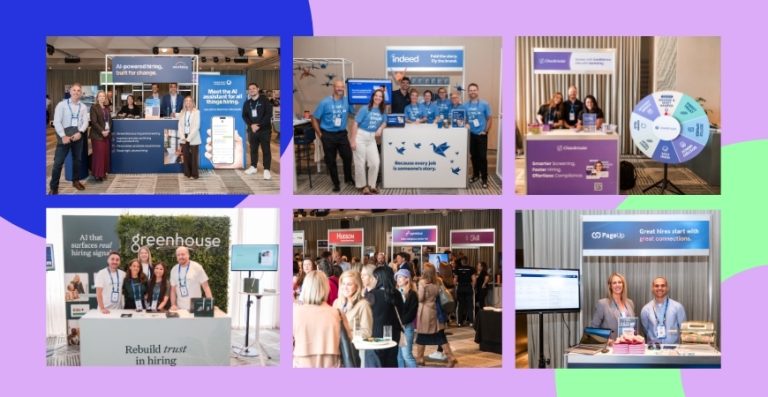
ATC2026 UPLIFT was yet another brilliant conference filled with thought provoking discussions, industry leaders and professionals connecting together and celebrating ATC’s 20th anniversary. Across these discussions, one challenge kept surfacing: how do talent professionals become stronger strategic talent and workforce partners while building the capability to help organisations make better decisions?