Category: Talent Intelligence & Advisory
All
AI & Talent Tech
Candidate Experience
Case Study
Contingent Workforce
Diversity & Inclusion
Employer Branding & EVP
Events
Featured
Future Of Work
Industry Reports
Interview & Selection
Mobility & OD
Sourcing
TA Leadership
Talent Attraction
Talent Careers
Talent Intelligence & Advisory
TWIT
Uncategorized
- Alisa Belova
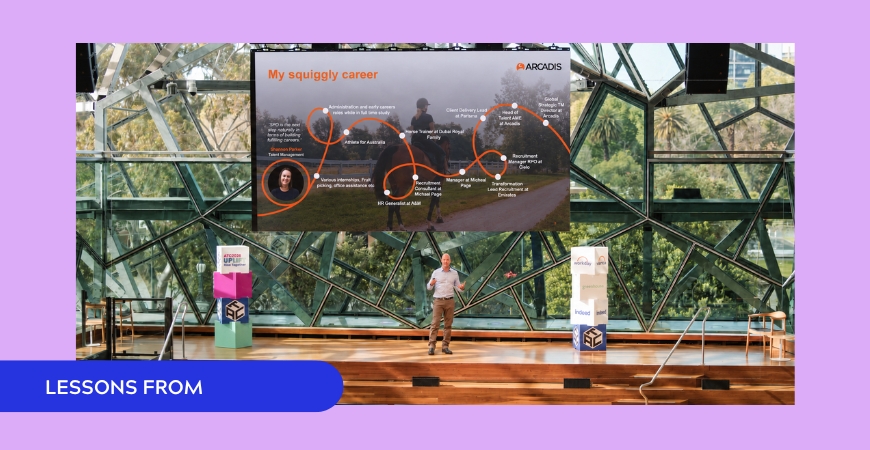
With approximately 35,000 employees across more than 20 countries, Arcadis set out to move beyond traditional job titles and change how it identifies, develops and deploys talent. I share nine lessons from Hugh Ragg’s ATC2026 session on Arcadis’s four-year skills-powered transformation, covering Eightfold, skills visibility, internal mobility, personalised learning, workforce planning and leadership ownership.
- Jake Ellul
CPP operates in one of Australia’s most constrained labour markets. The national energy transition is accelerating demand for engineering, construction and infrastructure professionals at a rate that the available talent market cannot easily support. Historically, success was measured by vacancies filled. Today, success is also measured by our ability to influence workforce strategy, challenge hiring assumptions and help leaders make decisions based on talent market realities.

- Kevin Wheeler
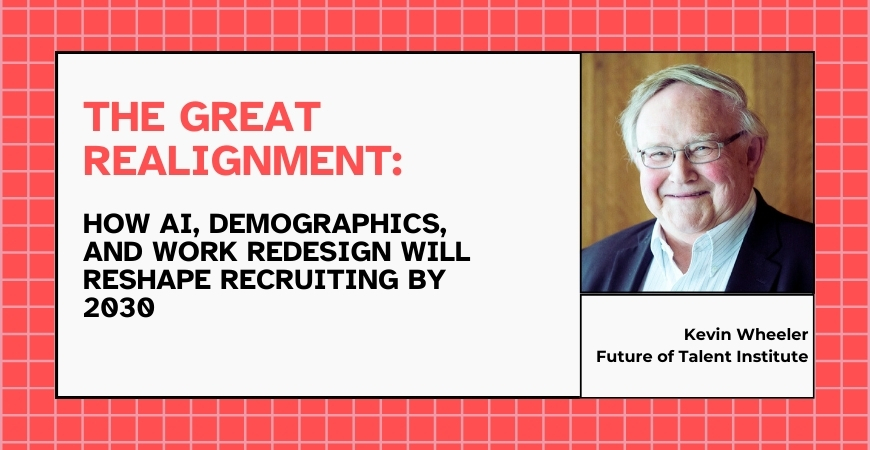
I am old enough to remember recruiting before any ATS systems or computers. We had file cabinets, folders, and Rolodexes for contact information.
I think it was around 1990 when Resumix, one of the first ATSs, appeared. Its resume-parsing/extraction technology promised to make it easy to search resumes and connect with candidates. It was revolutionary and exciting. We felt like we were on the cusp of an easier, more automated life. It didn’t prove to be either easier or more automated. It actually created more work. Not much different in a way than some recruiters now feel about AI.

- Jo Vohland
Our recent LinkedIn poll surfaced an important mindset shift for Internal Talent Acquisition Teams.
When asked who they saw as their ‘Customer’, the largest proportion of respondent (all Talent Acquisition Leaders and Senior Recruiters) chose ‘The Hiring Manager’. That perspective reflects a traditional recruitment model, where success is defined by responding well to a hiring request.

- Jo Vohland
As organisations rethink how work gets done, the boundaries between Human Resources, Talent Acquisition, Learning and Development, and the emerging discipline of Talent Architecture and Orchestration are becoming less clear. This operating model provides a practical comparison of each function’s purpose, trigger point, responsibilities, risks and measures of success.
- Ian McCreery, Adam Godson, Jo Vohland

- Natalie Badawy, Alexia Ellmers, Ashleigh Lyas
In 2026, the most effective talent acquisition professionals have stepped into the role of commercial coach. By moving beyond order-taking, these partners provide the value, data, and perspectives that hiring managers simply don’t have. This shift ensures that before a role is even posted, the strategy has been challenged and refined to maximize ROI and strategic alignment with departmental goals.
- Hai Nguyen
The Strategic Workforce Planning session at ATC2025, presented by Chris Hare and Alicia Roach, was one of those moments that made you stop and rethink how your organisation really plans for the future. It unpacked what happens when workforce planning evolves from a numbers exercise to a true business capability - one that connects people, purpose, and performance.
No posts found
Load More
Loading...