2025 Report Reveals the Five-Stage Journey to Talent Enablement

2025 report by Talent Strategy expert Nadine O’Regan unpacks the rapidly shifting landscape of Talent Acquisition, revealing a maturity model that redefines the function’s role in business success.

Titled “The Evolution of TA,” the report explores how TA teams are moving beyond traditional hiring practices into strategic business partnership and talent enablement.

“It’s no longer about filling roles. It’s about enabling growth, co-owning strategy, and creating long-term value through talent,” says Nadine O’Regan.

Key Insights from the Report Include:

  • TA’s New Mandate: From transactional hiring to transformational impact
  • The Five Stages of TA Maturity: From Reactive Recruiter to Strategic Talent Enabler
  • No Universal Path: The right approach depends on your organisation’s stage, complexity, and ambition
  • Talent Enablement as a Strategic Advantage: High-performing TA teams are influencing workforce design, capability planning, and business outcomes

With frameworks, real-world examples, and a clear roadmap for TA leaders, this report provides practical tools to benchmark progress and spark transformation.

Why It Matters Now

As workforce expectations shift and AI reshapes how work gets done, TA teams face increasing pressure to deliver value beyond speed and cost. This model offers clarity and direction for teams seeking to stay relevant, impactful, and aligned with the future of work.

Access the Full Report: The Evolution of TA

Article By

Get more articles direct to your inbox

Upcoming Events

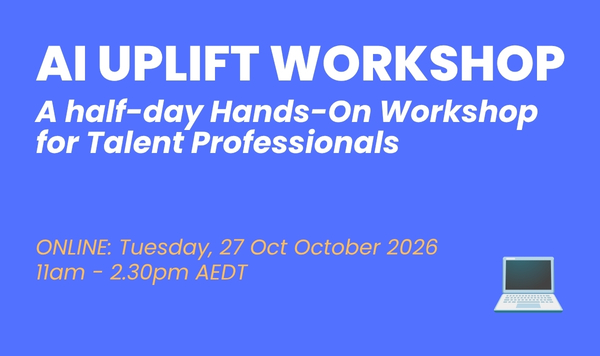
AI Uplift Workshop: Play Ball with AI

Tuesday, 27 October 2026

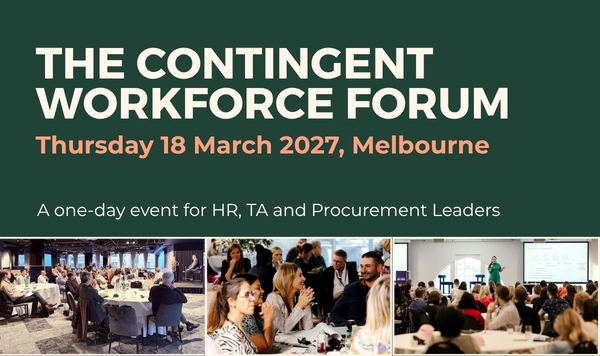
The Contingent Workforce Forum 2027

Thursday, 18 March 2027

The Contingent Workforce Survey

Open Now

CWF2026 Survey

You may also enjoy reading...

CPP operates in one of Australia’s most constrained labour markets. The national energy transition is accelerating demand for engineering, construction and infrastructure professionals at a rate that the available talent market cannot easily support. Historically, success was measured by vacancies filled. Today, success is also measured by our ability to influence workforce strategy, challenge hiring assumptions and help leaders make decisions based on talent market realities.
I am old enough to remember recruiting before any ATS systems or computers. We had file cabinets, folders, and Rolodexes for contact information. I think it was around 1990 when Resumix, one of the first ATSs, appeared. Its resume-parsing/extraction technology promised to make it easy to search resumes and connect with candidates. It was revolutionary and exciting. We felt like we were on the cusp of an easier, more automated life. It didn’t prove to be either easier or more automated. It actually created more work. Not much different in a way than some recruiters now feel about AI.
Our recent LinkedIn poll surfaced an important mindset shift for Internal Talent Acquisition Teams. When asked who they saw as their ‘Customer’, the largest proportion of respondent (all Talent Acquisition Leaders and Senior Recruiters) chose ‘The Hiring Manager’. That perspective reflects a traditional recruitment model, where success is defined by responding well to a hiring request.