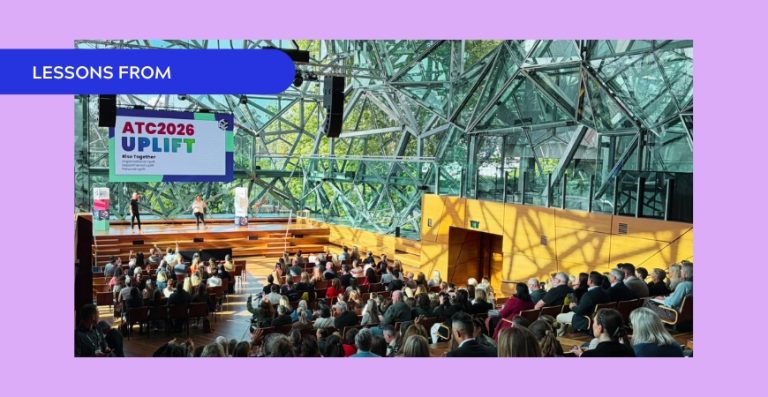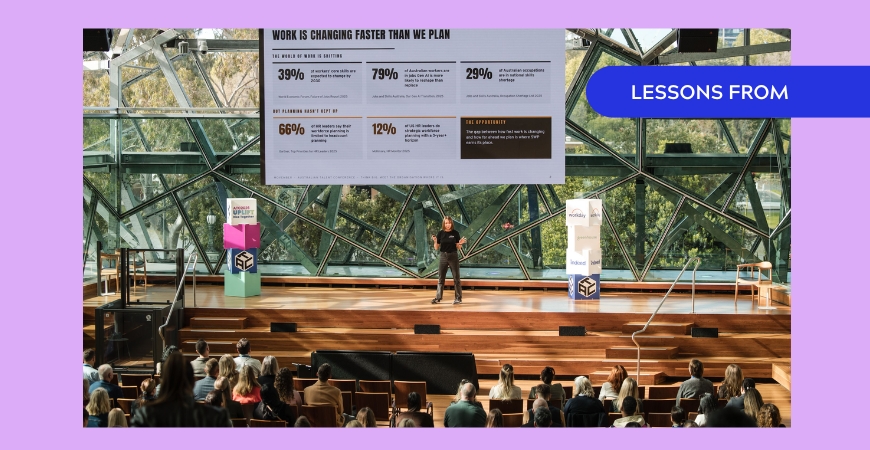
The opening keynote at ATC2026 UPLIFT was from Fiona Lund, Chief People Officer at Movember, with the session Inside Movember’s Workforce Lab: Creating the Conditions for Talent Advisory. In all of the discussions around Talent Advisory over the past five years, many tried but never took the time to create the conditions for Advisory to occur. That’s why this session was so relevant for so many.
The goal at Movember is bigger than making better hiring decisions. It wants every workforce decision to support a three-year view of the people, capability, cost and locations needed to deliver its strategy. For a charity, the purpose is clear: make every donated dollar go further by having people in the right places, doing the right work to improve men’s health.
Fiona shared her steps (and we also greatly appreciated the missteps!) in arriving at what is now the Movember Workforce Lab. The Lab brings Business, HR, Talent and Finance Leaders together to share accountability for workforce decisions, building the foundations for that longer-term ambition.
💡Lesson 1: Align People & Finance. Salary is, after all, a major business expense. Being a charity, Movember has specific budgets for programs and roles, so bringing Finance in early and connecting Workforce Planning with Budget Cycles was critical.
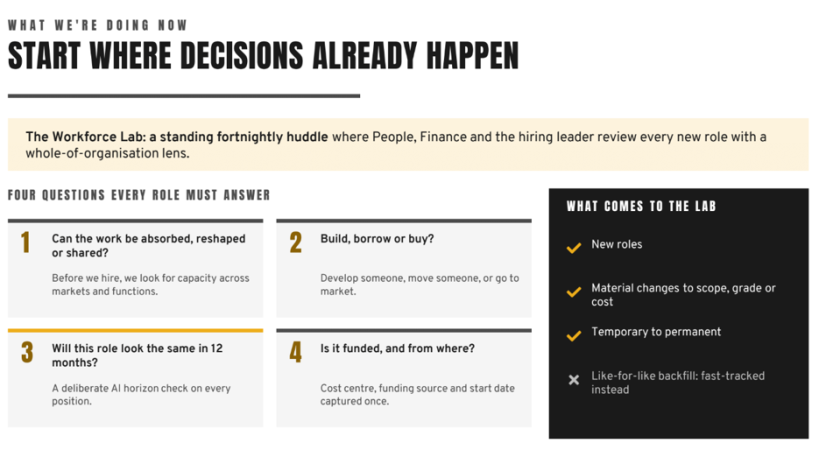
💡Lesson 2: Create the Conditions. One idealistic and energetic People Leader is not enough. You must understand the maturity and capacity of the business, and build your planning into Operational Rhythms. No more individual persuading. The Workforce Lab is now how people planning at Movember is done. The fortnightly Workforce Lab Forum connects business strategy, operational plans, people budgets and workforce planning.
💡Lesson 3: Work Design via lenses and questions. Together, the Workforce Lab considers each requirement through four lenses: People, Role, Capability and Capacity. Rather than simply approving a new role, the Lab examines the work and capability required. Can the work be absorbed, redesigned or shared? Does the capability already exist internally? Is there a role or department globally that they can leverage? Should Movember buy, build, borrow or automate?
💡Lesson 4: It’s OK to have a 3-year plan. Rather than coming into a business and trying to deliver everything within a year, Fiona found that delivering a 3-year plan but reporting often on progress was a better approach that allowed the business time to go on the shared journey.
💡Lesson 5: Start with data people believe in. Movember’s People, Finance and Talent systems weren’t talking to each other. The team used Power BI to bring that data together, giving People and Finance a shared view of the workforce. There are still discrepancies to reconcile, but they now have a common starting point for decisions. Connecting talent management data is the next step, so they can better see the capabilities already within the organisation. You don’t need perfect data to start, but you do need data people trust.
💡Lesson 6: Protect the time to do something different. The recruitment requests don’t stop while you build a more planned approach. Fiona was clear that you must deliberately carve out time for the future workforce conversations, and reset expectations with leaders about delivery. For a small team, that also means being explicit about what you won’t tackle yet. Mapping every skill and buying a new system weren’t priorities for year one. Getting the foundations working was.
💡Lesson 7: A backfill can still be the right decision. Not every vacancy needs to become a full work redesign exercise. Fiona and Eden spoke about balancing urgency with the opportunity to rethink a role. For Movember, the human connection in fundraising also matters when considering automation. Sometimes a like-for-like backfill is a considered decision while a bigger conversation about the work continues. The important part is asking the questions and understanding the trade-offs.
💡Lesson 8: Let Business Leaders tell the story. People teams can explain the benefits repeatedly, but leaders who have experienced those benefits carry their own influence. Fiona encouraged getting those leaders to share what has worked and become advocates across the business. Keep showing progress, measuring outcomes and explaining why the approach matters. Embedding a different way of making workforce decisions takes more than an executive endorsement or a successful launch.
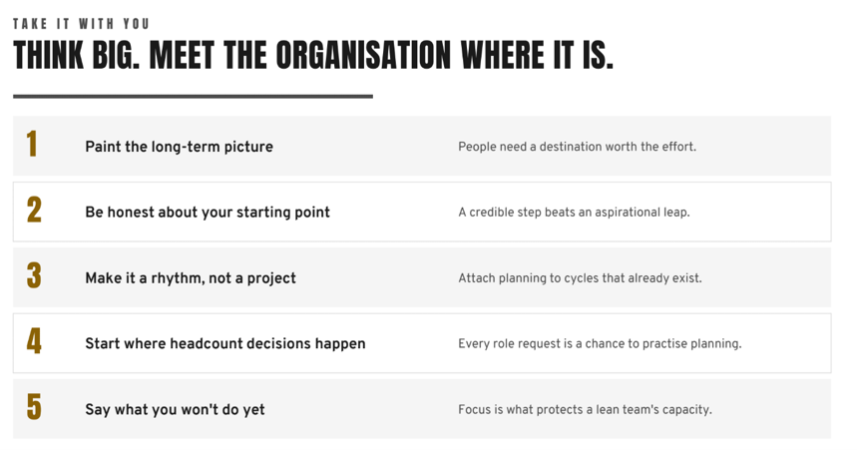
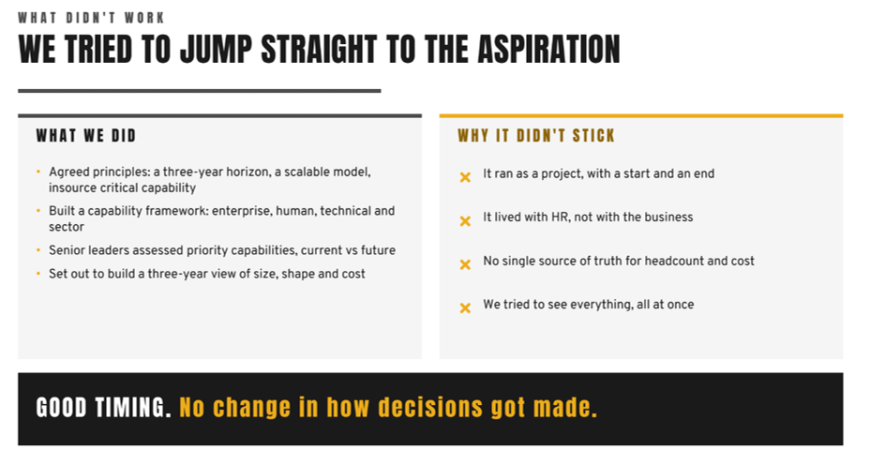
What resonated with many was Fiona’s honesty about the first attempt. There was a model, a capability framework and executive involvement. But when the project stopped, the work stopped. A challenge many could identify with. The Workforce Lab was their next step in building workforce planning into how the business operates, with a three-year ambition still ahead.
For those thinking about Talent Advisory, there’s a useful question here: what needs to change in how our organisation makes workforce decisions for advisory to become part of everyday work?
This session recap is from the Australasian Talent Conference: ATC2026 UPLIFT, Australia’s largest, longest-running independent Talent Acquisition conference. The takeaways reflect my personal views and understanding as an audience member.