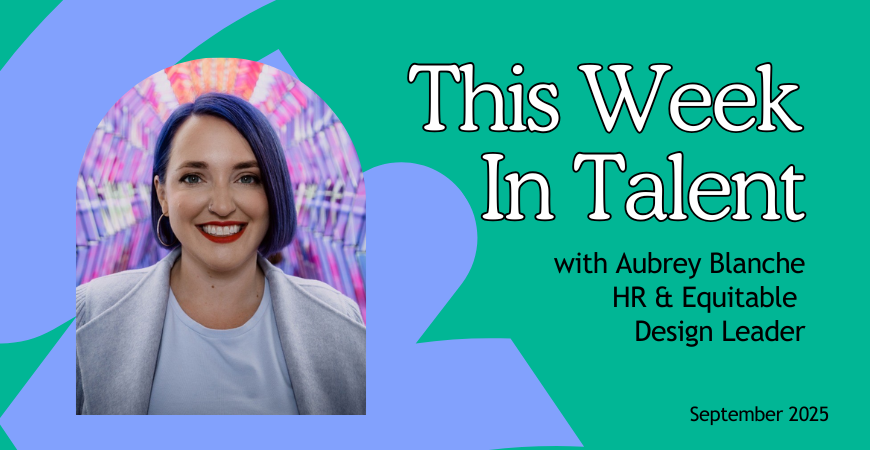
As AI and new work models take hold, expectations on HR and Talent Leaders will intensify, with new role requirements quickly emerging. Interviews will test not only your past expertise but also your ability to lead the evolving programs of work. Jo Vohland collaborated with HR & Equitable Design Leader, Aubrey Blanche to map out some examples of Interview Questions you may soon be asked.
For the HR Leader
Human-AI Work Design: When you think about redesigning work with AI, do you see AI as replacing certain tasks, augmenting human work, or doing something else entirely? How do you determine where each approach is appropriate?
Trust, Culture, and Change Management: Introducing AI changes how employees experience their roles. How would you build trust, psychological safety, and buy-in so AI is seen as an enabler rather than a threat?
Equity and Inclusion: How would you evaluate whether AI is actually shaping equitable outcomes for different groups of employees? Can you give an example of how you’d test for unintended impacts?
Cross-Functional Alignment: The value of AI depends on coordination across teams (HR, IT, business units). What approaches would you use to align these functions around shared priorities and reduce duplication or fragmentation?
Governance: When leading an AI pilot, what governance and oversight would you put in place to ensure it is ethical and legally compliant?
Measurement: What outcomes would you measure to understand whether the pilot is delivering value – whether that’s efficiency, quality, or other forms of business impact?
For the TA Leader
Recruiter–AI Collaboration: What’s your philosophy on the recruiter’s evolving role when AI agents can screen, schedule, or generate content? Where should recruiters lean into human advantage?
Candidate Experience: How would you design hiring processes that integrate AI agents without creating a transactional or impersonal candidate experience?
Efficiency vs. Effectiveness: Many AI tools promise speed, but not always quality. How would you assess whether AI is improving hiring outcomes (better matches, reduced bias, stronger retention) rather than just compressing timelines?
System Redesign: Not every hiring friction point needs AI to solve it. How would you evaluate whether AI is the right solution versus rethinking existing processes, tools, or role responsibilities?
Strategic Workforce Impact: AI opens up new possibilities in skills intelligence, workforce planning, and internal mobility. How would you reframe the role of TA to move beyond filling requisitions to shaping how the organisation thinks about talent in an AI-enabled future?
——–
If you don’t yet feel equipped to answer these questions, don’t worry! You’ll also be able to catch Aubrey live on stage at the ATC2025 Conference with her session “Re-Designing Work in the Fourth Industrial Revolution”. She’ll be sharing how work is scoped, structured, and distributed in an AI-enabled economy where value, not volume, becomes the metric that matters. You’ll learn how to move beyond legacy job architectures and redesign roles to thrive in a more dynamic, tech-enabled world. Secure your spot in amongst 500 HR and Talent Leaders who are flying in from all over the country to attend. ATC is here to strengthen your growth and readiness so HR & Talent Leaders can thrive in a changing world of work. See the full 2 day agenda here.