“You’ll love it here. We’re just like a big family.”
We’ve all heard it said in job interviews. In fact, you may have even said it yourself to a candidate when trying to communicate the workplace culture.
But while it’s often said with the best intentions (after all, many people have very positive associations when we think of the word family) labelling a company or organisation as a “family” has the potential to blur boundaries, increase exploitative behaviours, and significantly impact your recruitment and retention efforts.
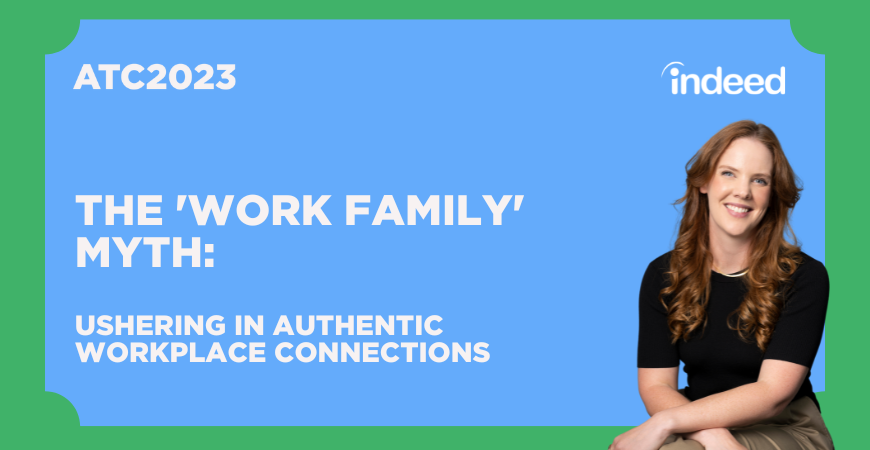
Indeed Australia’s Talent Strategy Advisor Lauren Anderson thinks that we need to do away with the “work family” rhetoric, and instead shift focus towards cultivating authentic and meaningful connections in the workplace. Before she joins us at the upcoming ATC2023, we sat down with her to delve deeper into why we need to dismantle the “work family” myth.
The word “family” connotes care and connection…so why does the phrase “work family” negatively impact recruitment and retention?
It’s true that there are warm feelings associated with the word “family” – it’s a place of protection and growth. People go the extra mile for family members and unless you’ve had a negative experience in your personal upbringing, most people will think very positively about families.
This phrase, when it entered our workforce lexicon, certainly had good intentions however, labelling a company or organisation as a “family” has the potential to blur boundaries, create pretty unrealistic expectations and risk the rise of exploitative behaviours. The reality is that workplaces and families are different – we didn’t sign a contract when we joined our families.
Organisations that adopt familial language can selectively leverage this idea to their advantage. They may claim to be a “family” until cost-cutting measures necessitate layoffs, or until employees seek fair compensation through a pay raise request.
In the end, using “family” language at work can blur the lines and confuse the usual work agreement, which is about doing the work, getting paid fairly, and being treated respectfully.
How should organisations look to cultivate meaningful connections and community instead of focussing on the “work family”?
When discussing the idea of a “work family,” businesses should prioritise clear communication and well-defined boundaries instead of relying on this overused phrase. To borrow wisdom from Brené Brown, “Clear is kind, unclear is unkind.” Focusing on the importance of maintaining healthy boundaries in the workplace to ensure both the wellbeing of employees and the health of professional relationships.
Research indicates that defining a clear and compelling purpose can foster a stronger sense of loyalty and heightened employee engagement, particularly when the company’s purpose aligns with that of its employees. This is very similar to what I believe businesses are trying to achieve when they roll out the “work-family” language.
Any great examples of companies moving away from the “work family” rhetoric that Talent Teams can look to?
Some companies are embracing a different approach and moving away from the “work family” concept, instead of laying additional meaning on top of the term “co-worker,” they aim for clearer workplace dynamics. By establishing healthier boundaries at work, these organisations hope to set an example for other relationships in life. Someday, families might even boast about how they interact like efficient “co-workers”!
One such alternative is to consider the idea of “work friends” rather than a “work family.” This approach encourages employees to build meaningful connections in the workplace while respecting personal boundaries. However, it’s essential for talent teams to be candid about whether fostering friendships is a priority within their organisation. If it’s not, that’s perfectly fine; they should own it. Some companies have successfully embraced a high-performance culture that values employees excelling in their roles without the pressure to consider colleagues as family members. In such environments, performance takes precedence over personal connections. If this aligns more with your organisation’s ethos, it may be a path worth exploring.
Want to know more? Join us at ATC2023 at Sydney’s Luna Park on 22nd & 23rd November to hear Lauren’s presentation The ‘Work Family’ Myth: Ushering in Authentic Workplace Connections.
If you want to read more about the current state of wellbeing of Australian workers, download Indeed’s Wellness at work: Navigating the path to thriving whitepaper.