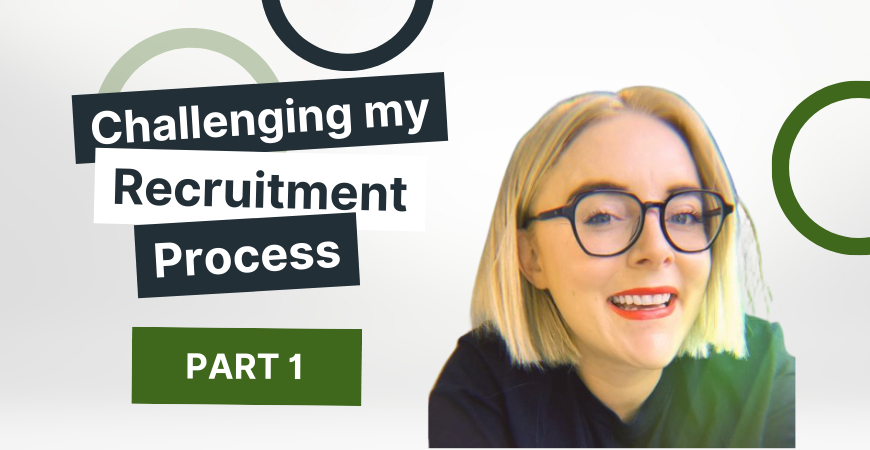
It’s me – Jody!
If you’re a regular TWIT reader, you’ll know that I’ve been trying something different with my recruiting recently.
I wanted to test myself to see if I could create a process without a single behavioural question in it. Working in the Government for a long time has conditioned me into thinking that “the best predictor of future performance … is past performance” which we now know isn’t exactly true.
I also should add that before I could do any planning or recruitment, I had to first put together a massive memo/business case as to why I needed extra resources in the first place. That is a WHOLE other story that I won’t bore you with here, however if you’re ever looking for more resources and need help putting a business case together … please reach out. I can help. I’m an expert at business cases now!
Anyway, once the memo was approved and I could start recruitment, the first thing I did was take myself for a coffee and do some serious pondering on the following things …
1. Defining the person I wanted to recruit.
I did this by defining exactly what qualities I wanted my future recruits to have. To do this I needed to have a look at my current team, and what bits would best complement them.
I have a legendary team now who are all best buddies, and have their own qualities, strengths and weaknesses so I wanted to ensure that the bits that were missing or would complement the team were the bits I focused on in the recruit.
2. Defining the previous experience needed.
This was a hard one for me. I had to really challenge my brain on its bias of thinking the person must have previous recruitment experience.
My current team are well established and have a wide variety of recruitment experience. I could easily leave them to run their own show whilst I trained up and supported a newbie. I could also buddy the new person up with one of the more senior TA peeps.
We all know that the market for talent acquisition professionals is very competitive, and as this role was more on the entry level side of things … I decided that previous recruitment experience wasn’t necessary. The skills and qualities I needed for this role were: customer service, strong written and verbal communication skills, and an ability to learn and adapt quickly. I also highly value creativity and the ability to problem solve.
3. Thinking about whether this role could have a diversity focus.
It isn’t lost on me that whilst the market for talent is especially tight now, there are whole cohorts of people from underrepresented backgrounds currently struggling to find meaningful work or who are underemployed and would love this opportunity. I wanted to ensure that I designed the advertisement content and assessments so that they were accessible to all, and highly encouraged people from all minorities and backgrounds to apply.
4. Tweaking the Position Description (PD).
Times have changed a lot over the last few years, and as such, the PD needed a refresher to align with what Talent Acquisition Advisers are now required to do.
Once I had the PD looking fresh, and my thought processes documented … it was time to create an assessment strategy and plan of attack. THAT … will be in part 2 of this series. 😉